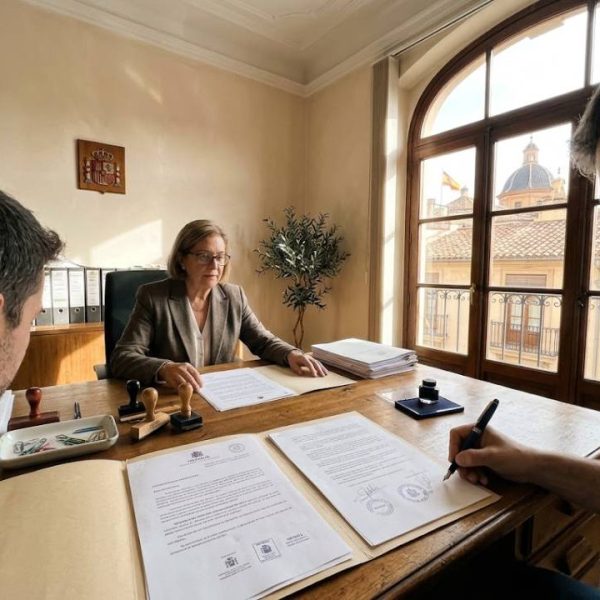
Moving to Spain, buying a flat, marrying or starting a business all involve paperwork. If your documents are in another language, Spanish offices usually ask for a sworn translation. This type of translation carries legal weight and is accepted by courts, notaries and public bodies. Here is what it means, when you need it and how to order it without losing time.
What a sworn translation is
A sworn translation is made by a translator officially authorized by the Spanish Ministry of Foreign Affairs. The translator signs and stamps the document to confirm that it is a faithful rendering of the original.
The stamp is what gives the translation legal value in front of Spanish authorities.
When Spanish offices ask for it
Typical cases include birth and marriage certificates, criminal record certificates, diplomas, powers of attorney, court judgments, company statutes and property deeds. Immigration and residency files almost always require it.
Notaries and registries are especially strict, so ask which documents need sworn versions before you book an appointment.
Documents from the other direction
You may also need to send Spanish documents abroad. In that case, the receiving country decides which kind of translation it accepts.
Some countries want a translator authorized locally, so check the requirements first. Our guide on sworn translation of a criminal record in Spain shows how one common case works.
Apostille and legalization
Many foreign documents also need an apostille, which confirms the authenticity of the signature or stamp. Some countries require full legalization instead.
The Spanish Ministry of Foreign Affairs publishes information about sworn translators and document procedures.
How the process works
You send a clear scan of each document. The translator prepares the text, adds a certificate statement and delivers a stamped paper version or a digitally signed PDF.
Ask which format the receiving office accepts. Some still demand the original paper with a wet signature.
Names, dates and numbers
Mistakes in a name or number can cause a refusal. Provide your passport so that the translator can copy names exactly as written there.
Date formats differ between countries, and the translator should write them in an unambiguous way.
Time and cost
Short certificates may be ready in a day or two, while longer files take longer. Prices depend on language, length and urgency, and some translators charge a minimum fee per document.
Ask for a quote that includes stamps, delivery and any extra copies.
Choosing a trustworthy provider
Check the translator's registration, ask for references and read how they handle confidentiality. A good provider answers your questions clearly and shows sample certificates.
For clients outside Spain, specialists in certified document translation services can coordinate the translation and advise on the formal requirements.
Regional differences
Valencia, Catalonia, the Basque Country and Galicia have their own co-official languages. Documents in Catalan, Valencian, Basque or Galician may need different translators.
Always mention the exact language variant in your request.
Digital signatures and e-filing
More Spanish offices now accept electronic filing. Ask whether a digitally signed translation is valid for your procedure and which platform you must use.
Keep a copy of every file you submit, along with the date and receipt.
Common mistakes to avoid
People often start the translation before asking the office what it requires, translate only part of a document, or forget that stamps and handwritten notes also need translation.
Another frequent issue is an old or damaged scan that hides important text.
Expats and property purchases
Buying property involves a deed, tax numbers, mortgage documents and often a power of attorney. A notary may refuse to continue if one paper lacks a sworn translation.
Prepare these documents several weeks before the signing date.
Students and workers
Universities and employers may ask for degree certificates, transcripts and professional records in Spanish. Check if they need the sworn version or whether a simple translation is enough.
Official recognition of foreign qualifications can take months, so start early.
Powers of attorney
If you cannot be in Spain for a signing, a power of attorney lets someone act for you. The document must name the powers clearly, and it often needs a sworn translation and an apostille.
Review the wording with a lawyer, because a vague power can be refused by the notary.
Companies and business documents
Setting up a Spanish branch or buying a company means translating statutes, registry extracts and board decisions. Terminology differs between legal systems, so choose translators with legal experience.
Plan time for review by your own lawyer before you submit anything to the registry.
What to do if a translation is rejected
Ask the office for the exact reason in writing. It may be a missing stamp, an unclear scan or a wrong format. Send the reason to your translator, who can usually fix the issue quickly.
Keep everything organized
Store originals, translations and receipts in one folder, with a list of what each office has already received.
With careful planning and the right translator, Spanish paperwork becomes much less stressful.